 By Olivia Wilson
Gun-free zone laws around Florida school grounds are designed to protect students, teachers, staff members, and visitors from firearm-related threats. Although Florida allows eligible individuals to carry concealed firearms under certain conditions, those permissions do not automatically extend to school property or school-sponsored activities.
Florida Statute 790.115 establishes restrictions on possessing or discharging firearms and other weapons at schools, school buses, school bus stops, and certain school-related locations. Violations can result in criminal charges, including felony offenses in some circumstances. Understanding these restrictions is important for parents, students, visitors, school employees, and firearm owners.
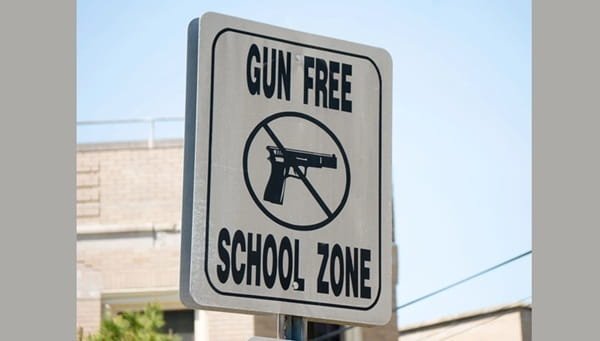
What Is a Gun-Free Zone Around a Florida School?
A gun-free school zone is an area where the possession or use of firearms and certain other weapons is restricted by law. Florida’s rules are primarily established under Section 790.115 of the Florida Statutes, although federal law may impose additional restrictions in some circumstances.
Florida law generally prohibits possessing firearms and specified weapons on school property, at school-sponsored events, on school buses, and at school bus stops, subject to statutory exceptions.
The law’s definition of a school includes public and private preschools, elementary schools, middle schools, junior high schools, secondary schools, career centers, and postsecondary schools.
The rules are not limited to students. Depending on the circumstances and applicable exceptions, parents, visitors, contractors, and other individuals may also be subject to these restrictions.
Understanding the 1,000-Foot School Zone Rule
Florida law includes a separate restriction concerning threatening or careless weapon displays within 1,000 feet of public or private elementary, middle, and secondary school property.
Under Section 790.115(1), exhibiting a firearm or specified weapon in a rude, careless, angry, or threatening manner, in the presence of another person and without lawful self-defense, can constitute a third-degree felony when the conduct occurs at a school-sponsored event, on specified school-related property, or within 1,000 feet of qualifying school property during school hours or a sanctioned school activity.
This provision is different from a blanket prohibition on possessing a firearm anywhere within 1,000 feet of every school. The legal restrictions depend on the particular conduct, location, timing, and statutory subsection involved.
The statute also contains an exception for certain displays on private property within 1,000 feet of a school by the property owner or someone authorized, licensed, or invited by the owner.
Can Someone Keep a Firearm in a Vehicle at School?
Florida law provides a limited vehicle-related exception, but it should not be treated as unrestricted permission to bring firearms onto school property.
Under Section 790.115(2)(a), a person may carry a firearm in a vehicle under the circumstances authorized by Section 790.25(4). However, school districts may adopt written and published policies that waive this exception for student and campus parking privileges.
Consequently, a firearm owner’s general right to possess a firearm in a private vehicle does not necessarily mean that a particular school parking area permits it.
Anyone considering keeping a firearm in a vehicle while visiting a school should verify the applicable state law, school district policy, and any other relevant restrictions. A concealed-carry license or eligibility to carry without a license does not automatically override school-specific restrictions.
Exceptions to Florida’s School Firearm Restrictions
Florida law recognizes specific exceptions to the general prohibition on weapons at school property and events.
For example, a firearm may be carried in a case to a firearms program, class, or function approved in advance by the school’s principal or chief administrative officer. Another exception concerns transporting a firearm in a case to a career center that has a firearms training range.
The statute also contains an exception for qualifying law enforcement officers. Other school-sanctioned activities may be permitted where authorized by applicable law.
These exceptions are limited. Individuals should not assume that general firearm ownership rights, concealed-carry eligibility, or permission to attend a school event automatically authorizes firearm possession on campus.
Criminal Penalties for Violating School Gun Laws
The consequences of a violation depend on the conduct and the specific provision charged.
Under Section 790.115, certain violations involving the knowing and willful possession of weapons on school property can constitute third-degree felonies. A third-degree felony in Florida generally carries a maximum penalty of five years in prison and a $5,000 fine, subject to applicable sentencing rules.
Other circumstances may result in different classifications. For example, the statute provides a second-degree misdemeanor classification for certain violations involving individuals authorized to carry concealed weapons or firearms. Unlawful discharge of a weapon can trigger separate and potentially more serious penalties.
Displaying a firearm in a threatening manner near a school may also lead to a felony charge under the statute. Additional offenses could apply if the incident involves threats, assault, injury, or other criminal conduct.
A conviction can have consequences beyond fines or imprisonment, including a criminal record and possible effects on firearm eligibility.
How School Gun-Free Zone Laws Are Enforced
Enforcement may involve school administrators, school resource officers, local police, sheriff’s deputies, and other authorized law enforcement personnel.
When a possible violation is reported, authorities may examine the location, whether school hours or a sanctioned activity were involved, the person’s conduct, applicable exceptions, and available evidence. Depending on the circumstances, the response may include an investigation, removal from school property, arrest, or criminal charges.
School districts may also impose disciplinary consequences under their policies. These administrative measures are separate from criminal proceedings and may apply to students or employees according to relevant rules.
Anyone involved in an incident should comply with lawful instructions, avoid escalating the situation, and seek qualified legal advice if criminal allegations arise.
Conclusion
Florida’s gun-free school zone rules impose significant restrictions on firearm and weapon possession at schools, school-sponsored events, school buses, and other specified locations. The 1,000-foot provision also addresses certain threatening weapon displays near qualifying schools, but it is not a universal ban on all firearm possession within that distance. Because statutory exceptions and school policies can affect individual situations, firearm owners should review current Florida law before entering school property with a weapon.
Frequently Asked Questions
Q. Are firearms prohibited on all Florida school grounds?
Florida generally prohibits possessing firearms on school property and at school-sponsored events, subject to specific statutory exceptions. The exact restriction depends on the location and circumstances.
Q. Does the 1,000-foot rule prohibit all firearm possession near schools?
No. The provision in Section 790.115(1) specifically addresses certain threatening, careless, angry, or rude weapon displays within the defined area during school hours or sanctioned school activities. It should not be interpreted as a blanket prohibition on all firearm possession within 1,000 feet of every school.
Q. Can a person with a concealed-carry license bring a firearm onto school property?
Generally, no. A concealed-carry license does not automatically authorize firearm possession on school property. Only applicable statutory exceptions or other legally authorized circumstances may permit it.
Q. Can a firearm remain inside a vehicle parked at a Florida school?
A limited vehicle exception exists under Florida law, but school districts may restrict its use for student and campus parking privileges. The relevant statute and applicable school policies should be checked before bringing a firearm onto school property.
Q. What penalties can apply to violations of Florida school gun laws?
Penalties vary by offense. Certain violations may constitute third-degree felonies, while other conduct may carry different penalties. Additional charges may apply depending on the circumstances.