 By Olivia Wilson
Florida law gives residents important legal protections when they use force to defend themselves or others inside their homes. These protections are often associated with the state’s Castle Doctrine and self-defense statutes. However, the law does not authorize unlimited force simply because an incident occurs inside a private residence. The legality of a defensive action depends on the nature of the threat, the circumstances of the encounter, and the requirements established by Florida law.
Understanding these rules can help homeowners, tenants, and other lawful occupants recognize their rights and responsibilities. It can also explain why some defensive actions may be legally justified while others can lead to criminal charges or civil litigation.
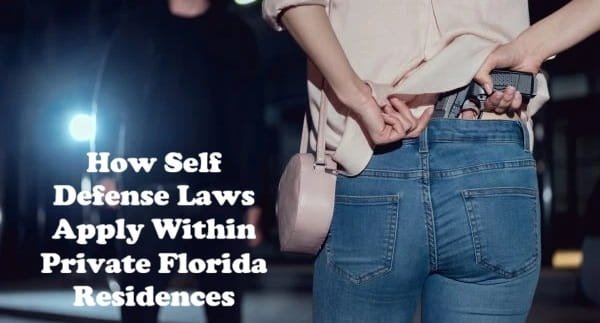
Understanding Florida’s Castle Doctrine
Florida’s Castle Doctrine refers to legal protections that may apply when a person uses force to defend themselves or others inside a dwelling, residence, or occupied vehicle. The doctrine is reflected in Florida Statutes Sections 776.012 and 776.013, which address the use of force in defense of a person and the presumption of reasonable fear in certain circumstances involving unlawful entry.
Under Section 776.013, a person is generally presumed to have a reasonable fear of imminent death or great bodily harm when using defensive force, including deadly force, if another person unlawfully and forcibly enters, or has unlawfully and forcibly entered, a dwelling, residence, or occupied vehicle, subject to statutory exceptions.
This presumption can be significant because it affects how the circumstances of an alleged defensive act are evaluated. However, it does not apply in every home-related confrontation. The statute contains exceptions, including certain situations involving lawful occupants, people who have a right to be in the residence, and other specified circumstances.
The doctrine should therefore be understood as a conditional legal protection rather than blanket permission to use force against anyone who enters a home.
When Is Nondeadly Force Justified Inside a Home?
Florida law permits the use or threatened use of nondeadly force when a person reasonably believes that such force is necessary to defend themselves or another person against another individual’s imminent use of unlawful force.
Nondeadly force generally refers to force that is not intended or likely to cause death or great bodily harm. Whether a particular action qualifies depends on the circumstances and the nature of the force used.
For example, a resident may be legally justified in using reasonable physical force to stop an imminent unlawful attack. However, the law does not automatically authorize force in response to a verbal argument, an insult, or a disagreement that does not involve an imminent unlawful threat.
The fact that an incident takes place inside a private home does not eliminate the requirement that defensive force be legally justified. A court may consider who initiated the confrontation, whether the threat was immediate, and whether the force used was permitted under the applicable law.
When Can Deadly Force Be Used in a Private Residence?
Deadly force is subject to stricter legal requirements than nondeadly force. Under Section 776.012, a person may use or threaten deadly force when they reasonably believe it is necessary to prevent imminent death or great bodily harm to themselves or another person, or to prevent the imminent commission of a forcible felony, subject to statutory conditions.
Section 776.013 provides additional protections in qualifying home-intrusion situations. When the statutory presumption applies, the law generally presumes that the person had a reasonable fear of imminent death or great bodily harm. This can support a self-defense claim when an intruder unlawfully and forcibly enters a qualifying location.
However, the presumption has exceptions. For example, it generally does not apply when the person against whom force is used has a legal right to be in the dwelling and is not subject to a qualifying protective order or other applicable exception. Other statutory exclusions can also affect the analysis.
A resident should not assume that deadly force is lawful merely because another person is inside the home without permission. The method of entry, the person’s conduct, the relationship between the parties, and the statutory requirements all matter.
Does Florida Law Require a Resident to Retreat?
Florida’s self-defense framework generally removes the duty to retreat for a person who satisfies the statutory conditions and is in a place where they have a right to be. Under Section 776.012, a qualifying person may use or threaten to use legally justified force without first having to retreat.
The Castle Doctrine is often discussed in connection with this principle because a person’s home is a central example of a place where they have a right to be. However, the absence of a duty to retreat does not mean that a person can initiate violence or use force for retaliation.
The use of force must still meet the applicable legal requirements. If a person unlawfully provokes an encounter or uses force after an immediate threat has ended, their ability to rely on self-defense may be limited by the circumstances and other statutory provisions.
Can Homeowners Use Force to Protect Their Property?
Florida law distinguishes defending a person from defending property alone. Under Section 776.031, nondeadly force may be justified when a person reasonably believes it is necessary to prevent or end an unlawful trespass or interference with property.
Deadly force is subject to a much stricter standard. It generally cannot be used solely to protect belongings from theft or damage. Under the statute, deadly force in defense of property may be justified when a person reasonably believes it is necessary to prevent the imminent commission of a forcible felony, subject to the law’s requirements.
For example, discovering someone taking a bicycle from a garage does not automatically justify using deadly force. If the situation also involves an imminent threat of death or great bodily harm, a separate analysis of defensive force may apply.
Immunity From Criminal Prosecution and Civil Liability
Florida Statutes Section 776.032 provides immunity from criminal prosecution and civil actions for force that is legally justified under the relevant self-defense statutes. This protection can be important when a homeowner faces an investigation or lawsuit after a defensive incident.
However, immunity is not automatic simply because the incident happened inside a residence. The circumstances must support a legally justified use of force. Law enforcement may investigate, and a court may need to determine whether the statutory requirements are satisfied.
Anyone involved in a serious home-defense incident should preserve relevant evidence, avoid making assumptions about the outcome, and consider speaking with a qualified Florida criminal defense attorney.
Conclusion
Florida’s self-defense laws provide important protections for people defending themselves and others inside a private residence. The Castle Doctrine can establish a presumption of reasonable fear in qualifying unlawful-entry situations, while the broader self-defense statutes explain when nondeadly or deadly force may be justified.
These protections have limits. The nature of the threat, the person’s legal right to be in the residence, and the type of force used can all affect the outcome. Anyone involved in a serious incident should seek qualified legal guidance.
Frequently Asked Questions
Q. Can I use deadly force against someone who breaks into my Florida home?
Florida law may presume a reasonable fear of imminent death or great bodily harm when someone unlawfully and forcibly enters a qualifying dwelling or residence. However, statutory exceptions apply, and the use of force must satisfy the relevant legal requirements.
Q. Do I have to retreat before defending myself inside my home?
Generally, no. A person who has a right to be in the residence does not have a duty to retreat before using legally justified force under Florida’s home-defense statute.
Q. Can I use force against a family member who lives in my home?
The circumstances matter. A lawful resident may have a right to be in the dwelling, which can affect whether the statutory presumption of reasonable fear applies. Protective orders, the nature of the threat, and other legal factors may also be relevant.
Q. Can I use deadly force to protect my belongings?
Not merely because property is being stolen or damaged. Deadly force is subject to strict legal requirements, including circumstances involving imminent death, great bodily harm, or the imminent commission of a forcible felony.
Q. Can I face a lawsuit after defending myself at home?
Florida law provides immunity from certain civil actions when the use of force is legally justified. Whether that immunity applies depends on the circumstances and the applicable legal requirements.