 By Olivia Wilson
Florida law regulates the possession, carrying, and use of knives and other concealed weapons through several provisions of Chapter 790 of the Florida Statutes. Although many ordinary knives can be legally owned, the rules governing how they may be carried depend on the type of knife, whether it is concealed, the carrier’s circumstances, and the location involved.
Understanding these distinctions is important for Florida residents, visitors, workers, and anyone who regularly carries a pocketknife or other blade. A knife that is lawful to own at home may be subject to different restrictions when carried concealed in public, taken onto school property, or carried with unlawful intent.
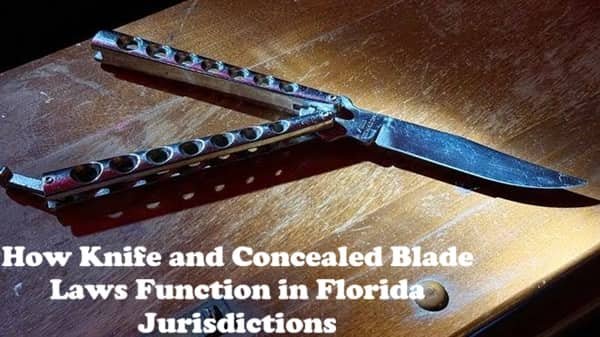
How Florida Law Defines a Concealed Weapon
Florida Statutes Section 790.001 provides definitions used throughout the state’s weapons laws. The definition of a concealed weapon generally includes a weapon carried on or about a person in a manner that conceals it from the ordinary sight of another person.
Whether an item qualifies as a concealed weapon can depend on its design, how it is carried, and the circumstances. A knife carried inside a pocket or concealed beneath clothing may raise different legal questions from a tool that is openly visible.
Florida law also distinguishes ordinary pocketknives from other types of knives when applying certain concealed-carry provisions. However, the fact that a knife is small or commonly sold as a pocket tool does not automatically make every method of carrying it lawful.
The legal analysis may also depend on whether the item is designed primarily as a cutting tool or is considered a weapon under the applicable statute. Because the definitions are specific and can change, anyone uncertain about a particular blade should review the current statutory language rather than relying on the knife’s marketing description.
Can Knives Be Carried Concealed in Florida?
Florida’s concealed-carry framework allows eligible individuals to carry certain concealed weapons without obtaining a state license, subject to statutory requirements. Section 790.01 addresses carrying concealed weapons, including knives that fall within the applicable legal definitions.
Florida’s permitless concealed-carry provisions do not mean that every blade can be carried anywhere or by anyone. A person must satisfy the applicable eligibility requirements, and other laws may prohibit possession in particular locations or circumstances.
Florida law also provides different treatment for certain ordinary pocketknives. The precise classification matters because the rules governing an ordinary pocketknife may differ from those governing other concealed knives or weapons.
Owners should therefore consider both the type of knife and the way it is carried. A general assumption that all knives are legal to carry concealed—or that all concealed knives are prohibited—can lead to an inaccurate understanding of Florida law.
Restrictions on Automatic and Other Specialized Knives
Knives vary considerably in design. Some are ordinary folding pocketknives, while others include automatic-opening mechanisms or specialized blade designs. Florida’s legal framework may treat particular categories differently depending on the statutory definition and circumstances.
The legality of possessing a knife should not be confused with the legality of carrying it concealed, carrying it into a restricted location, or using it against another person. Even where a particular knife may be lawfully owned, other statutes may restrict its possession or use.
Florida law also prohibits the use or possession of weapons in certain circumstances involving unlawful intent. A person carrying a knife for a lawful work or recreational purpose is in a different legal position from someone carrying it while committing a crime or threatening another person.
Anyone who carries a specialized blade should check the current statute and any applicable local rules before taking it into public or restricted property.
Even when a knife is lawful to possess, carrying it into certain locations can be prohibited. Florida Statutes Section 790.115 restricts weapons on school property, at school-sponsored events, and in other specified educational settings. The law contains limited exceptions, but these should not be treated as general permission to bring knives onto school grounds.
Other restrictions may apply in courthouses, correctional facilities, government buildings, airports, and locations governed by federal law. Private businesses and property owners may also impose rules regarding weapons on their premises, subject to applicable law.
People who carry pocketknives for work, camping, fishing, or other ordinary activities should check the rules before entering a restricted facility. A lawful purpose for owning a knife does not automatically create an exception to location-based restrictions.
Penalties for Unlawful Concealed Knife Carry
Florida Statutes Section 790.01 generally makes carrying a concealed weapon without the required legal authorization a first-degree misdemeanor, subject to the statute’s provisions and exceptions. A first-degree misdemeanor may carry penalties of up to one year in jail and a fine of up to $1,000 under Florida’s general sentencing laws.
More serious consequences may apply when a knife is possessed or used during another criminal offense. Threatening someone with a blade, using it unlawfully, or carrying it into a prohibited location can raise legal issues beyond concealed-carry rules.
The outcome depends on the knife’s classification, the person’s conduct, the location, and any applicable statutory exceptions. If someone is charged with an unlawful weapons offense, a qualified Florida criminal defense attorney can evaluate the circumstances and explain potential defenses.
Practical Guidance for Knife Owners
Knife owners should identify the type of blade they possess and understand how Florida law treats it. They should also consider the purpose for carrying it, whether it will be concealed, and whether their destination has special restrictions.
Keeping a knife for ordinary activities does not remove the responsibility to follow weapons laws. Owners should avoid carrying blades into schools or other restricted facilities unless a clearly applicable legal exception permits it. They should also never use a knife to threaten or intimidate another person.
When traveling outside Florida, individuals should check the laws of their destination because knife definitions, blade restrictions, and concealed-carry rules can differ between states and local jurisdictions.
Conclusion
Florida’s knife laws distinguish between owning a blade, carrying it concealed, possessing it in restricted locations, and using it unlawfully. The type of knife and the circumstances of possession are central to determining whether a particular action is permitted.
Knife owners should review the current Florida Statutes, pay attention to school and government property restrictions, and check the laws of other jurisdictions when traveling. If a specific blade or carrying situation raises legal concerns, consulting a qualified Florida attorney can help clarify the applicable requirements.
Frequently Asked Questions
Q. Are knives legal to own in Florida?
Many ordinary knives can legally be owned in Florida. However, restrictions may apply to particular weapons, prohibited locations, unlawful uses, or individuals who are legally barred from possessing weapons.
Q. Can I carry a pocketknife concealed in Florida?
Florida law treats certain ordinary pocketknives differently from other concealed weapons. Whether concealed carry is lawful depends on the knife’s classification, the circumstances, and the applicable statutory requirements.
Q. Can I bring a knife onto school property?
Generally, weapons are restricted on school property under Florida law. Limited exceptions may apply, but carrying a knife onto school grounds without confirming the applicable rules can result in legal consequences.
Q. What is the penalty for unlawful concealed knife carry?
Depending on the circumstances and applicable statute, unlawful concealed weapon carry may be a first-degree misdemeanor, potentially punishable by up to one year in jail and a fine of up to $1,000.
Q. Do Florida knife laws apply outside public places?
Yes. Some restrictions concern possession or use regardless of whether the knife is carried in a public place. Other rules depend on location, intent, or the conduct involved.