 By Olivia Wilson
Commercial trucks play an essential role in Florida’s economy, transporting construction materials, agricultural products, fuel, consumer goods, and other cargo across the state. However, heavy vehicles can damage roads and bridges, affect vehicle handling, and increase the risk of serious crashes when they are overloaded. Florida therefore regulates commercial truck weights through state statutes, vehicle registration requirements, inspections, and special permits for certain loads.
The main rules appear in Florida Statutes §§ 316.535 and 316.545, which establish weight limits and explain how violations are enforced. Understanding these requirements helps trucking companies, drivers, fleet managers, and cargo owners reduce legal risks and operate more safely.
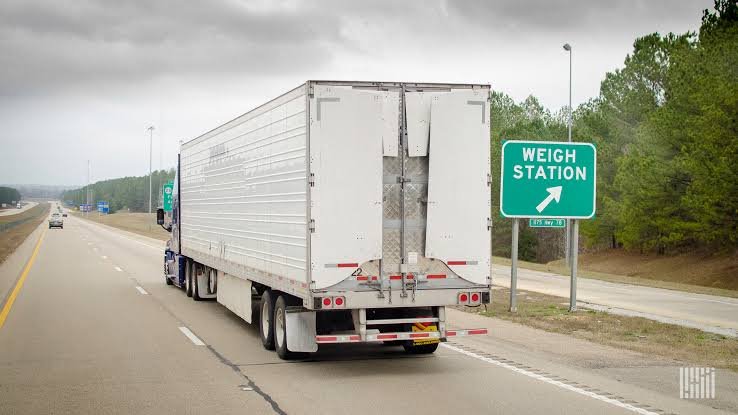
Florida’s Basic Commercial Truck Weight Limits
Florida does not apply one simple weight limit to every commercial vehicle. The legal maximum can depend on the truck’s axle configuration, the distance between axles, the highway being used, and any applicable special restrictions.
Under Florida Statutes § 316.535, the general maximum weight imposed on the highway through a single axle is 20,000 pounds. The law also uses axle-spacing calculations to determine how much weight a vehicle or combination of vehicles may carry across all its axles.
For vehicles operating on the Interstate Highway System, the overall gross weight generally cannot exceed 80,000 pounds, including enforcement tolerances, subject to the applicable axle and federal bridge-formula requirements. The 80,000-pound figure is not permission to exceed an individual axle limit or another applicable restriction.
Florida law also sets limits for non-Interstate roads and certain specialized vehicles. Consequently, drivers should check the rules for their particular truck and route instead of assuming that every vehicle may legally carry the same total weight.
Why Axle Weight and Gross Weight Both Matter
Truck weight regulation involves more than the total weight shown on a scale.
Gross vehicle weight refers to the weight of the vehicle and its load. Axle weight measures the amount of weight transmitted to the road through a particular axle or axle group. A truck may remain below its overall gross-weight limit but still violate an axle limit if cargo is distributed unevenly.
For example, a truck carrying construction materials might weigh less than the applicable total limit but place too much weight on its rear axle. That can create a violation even though the vehicle’s total weight appears acceptable.
Proper loading is therefore essential. Trucking companies should consider axle placement, trailer configuration, cargo distribution, and the vehicle’s declared weight when planning a shipment. Florida Statutes § 316.545 also recognizes that shifting or equalizing a load may resolve certain axle-weight problems when the vehicle otherwise complies with the applicable gross and bridge limits.
Special Restrictions on Bridges and Certain Roads
A truck that complies with general weight limits may still be prohibited from using a particular road or bridge at its current weight. Florida Statutes § 316.555 authorizes the Florida Department of Transportation and local authorities to impose lower weight limits when road, bridge, or culvert conditions require additional protection.
Drivers should pay attention to posted bridge restrictions, route-specific limits, and other applicable traffic controls. These restrictions are especially important for heavy construction equipment, large freight loads, and trucks travelling on roads with limited structural capacity.
Ignoring a posted restriction can lead to enforcement action and may create additional liability if the vehicle damages infrastructure or contributes to a collision.
When Are Overweight Truck Permits Required?
Some oversized or unusually heavy shipments may qualify for special permits under Florida law. However, a permit is not a general exemption from every weight rule.
Eligibility and conditions depend on the type of vehicle, load, route, and applicable permitting requirements. A permit may specify approved roads, travel conditions, operating restrictions, or other safety requirements. Violating those conditions can lead to penalties, and the permit may no longer protect the vehicle’s operation under the authorized terms.
Before transporting a load that exceeds ordinary limits, operators should confirm the correct permit requirements with the Florida Department of Transportation. They should also check whether additional restrictions apply to the intended route. A permit for one movement or configuration should not be assumed to authorize every subsequent trip.
How Florida Enforces Truck Weight Limits
Florida Highway Patrol officers and authorized Florida Department of Transportation weight inspectors can require a vehicle suspected of being overweight to stop and submit to weighing using portable or fixed scales. Drivers must cooperate with a lawful weighing requirement. Refusing can result in separate legal consequences.
If an inspection establishes an unlawful weight, the driver may be required to remain stopped while the amount of excess weight and applicable penalty are determined. Under § 316.545, certain excess weight beyond the statutory threshold must be unloaded. The owner or operator is responsible for the unloaded material as provided by law.
Florida’s weight-enforcement rules also include a 10% scale tolerance in the published weight tables used for enforcement, subject to statutory exceptions. This should not be treated as a universal allowance to deliberately overload a truck: operators must follow the applicable limits and enforcement rules.
Penalties for Violating Truck Weight Limits
The consequences of an overweight violation depend on the circumstances, including the amount of excess weight, the vehicle’s registration status, and the specific statutory provision involved.
Florida Statutes § 316.545 provides for weight-related penalties and contains separate rules concerning commercial vehicles that exceed their declared gross vehicle weight. For that particular violation, the statute specifies a penalty of five cents per pound of the difference between the measured weight and the declared weight. Other overweight violations may be calculated under different statutory provisions.
A violation can also delay a delivery, require cargo to be redistributed or unloaded, and increase operating costs. Businesses may face additional contractual or financial consequences depending on their agreements and the circumstances of the shipment.
Companies can reduce these risks by using certified scales where appropriate, checking registration and declared weight, training loading staff, and maintaining records of permits and weight measurements.
Conclusion
Florida regulates commercial truck weight through axle limits, gross-weight calculations, bridge restrictions, special permits, and enforcement procedures. Compliance requires more than checking a truck’s total weight: operators must also consider axle distribution, route-specific restrictions, registration details, and permit conditions. Careful loading practices and pre-trip weight checks help trucking businesses avoid penalties, reduce delays, and protect Florida’s roads and bridges.
Frequently Asked Questions
Q1. What is the maximum legal truck weight in Florida?
A: The limit depends on the vehicle, axle configuration, road, and applicable restrictions. Interstate operation generally has an 80,000-pound overall gross-weight ceiling, but axle and bridge-formula limits must also be satisfied.
Q2. Can a truck be overweight on one axle but under the total weight limit?
A: Yes. Florida regulates axle weight separately from total gross weight. Unevenly distributed cargo can cause an axle violation even when the truck’s overall weight is within the applicable limit.
Q3. Can an overweight truck receive a special permit?
A: Some loads may qualify for a special permit, depending on the circumstances and applicable rules. Operators should confirm the requirements and follow all permit conditions before travelling.
Q4. Can Florida officers require a commercial truck to be weighed?
A: Yes. Authorized officers and inspectors may require a suspected overweight vehicle to submit to weighing using portable or fixed scales. Refusing a lawful weighing order can lead to additional consequences.
Q5. What should a trucking company do to avoid weight violations?
A: Companies should check the applicable route limits, verify axle and gross weights, distribute cargo properly, confirm declared vehicle weight and registration, and obtain any required permits before departure.