 By Olivia Wilson
Brendan Ray Dassey is a Wisconsin man convicted as a teenager in the 2005 murder of photographer Teresa Halbach, a case made internationally famous by Netflix’s true-crime series Making a Murderer. Dassey remains in prison almost two decades after a jury found him guilty. Although a federal judge once overturned his conviction because of concerns about his confession, that ruling was later reversed. As of November, 2026, he is serving a life sentence in Wisconsin, with his earliest eligibility for release in 2048. A new request to shorten his sentence has also put his case back in the news.
Is Brendan Dassey Still in Prison Right Now?
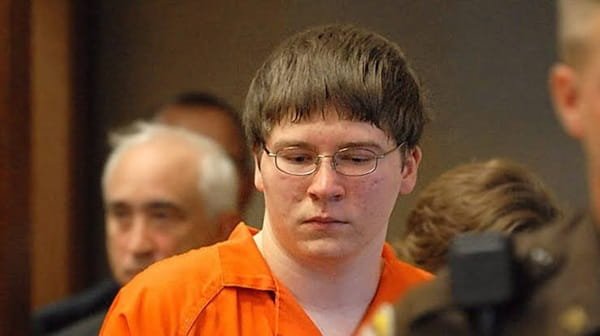
Yes. Brendan Dassey is still incarcerated at Oshkosh Correctional Institution in Wisconsin. His 2007 convictions for crimes connected to Teresa Halbach’s death remain in effect, and no court has ordered his release. He has not been approved for parole or granted a sentence reduction. His latest effort to seek relief is a September 2026 application to Wisconsin’s revived Commutation Advisory Board, not a successful appeal or a confirmed release.
Who Is Brendan Dassey?
Dassey was a teenager living near Manitowoc, Wisconsin, when Halbach disappeared in October 2005. He is the nephew of Steven Avery, who was separately convicted of murdering her. Their cases became the focus of the Netflix documentary Making a Murderer, released in 2015. The series drew attention to police interviews, disputed evidence and the criminal justice process. Dassey has maintained that he did not participate in Halbach’s death, even though a jury convicted him.
Why Did Brendan Dassey Go to Prison?
Teresa Halbach, a 25-year-old freelance photographer, visited the Avery family’s salvage yard on October 31, 2005, to photograph a vehicle. She disappeared, and investigators later found her remains on the property. During interviews in 2006, Dassey told detectives that he and Avery had sexually assaulted and killed Halbach and disposed of her body. He later recanted the incriminating statements. Prosecutors relied heavily on those interviews, while the defense argued that the admissions were unreliable and the result of police pressure.
What Was Brendan Dassey Convicted Of?
In April 2007, a Wisconsin jury found Dassey guilty of first-degree intentional homicide, second-degree sexual assault and mutilation of a corpse, all as a party to a crime. Being convicted as a party to a crime means the jury found criminal responsibility for participation with another person; it does not mean Dassey faced only a lesser accessory offense. He was tried separately from Avery. Dassey was 16 during the key police interviews in 2006 and 17 at the time of his trial.
How Long Is Brendan Dassey’s Prison Sentence?
On August 2, 2007, Dassey received a life sentence for first-degree intentional homicide. The court also imposed a 14-year sentence for second-degree sexual assault and a six-year sentence for mutilating a corpse. Those additional terms run concurrently with the life sentence, rather than being added one after another. The sentencing court set November 1, 2048, as the earliest date on which he could be released to extended supervision under the life sentence. This is not a fixed release date.
Where Is Brendan Dassey Being Held?
The latest Wisconsin reporting, including coverage in September 2026 that checked state records, identifies Oshkosh Correctional Institution as Dassey’s place of incarceration. The facility is operated by the Wisconsin Department of Corrections. Prison housing assignments can change, so the department’s official offender locator should be consulted for an exact location on a later date. Nothing in the available October 2026 reporting establishes that Dassey has left state custody.
Why Is Brendan Dassey’s Confession So Controversial?
Dassey’s videotaped interrogation became the central dispute in his case. His attorneys and advocates argue that detectives used suggestive questioning with a 16-year-old who had significant intellectual and social limitations, and that he gave statements shaped by investigators’ suggestions. Prosecutors maintained that the confession was voluntary, and Wisconsin courts initially accepted it. The legal disagreement concerns whether the questioning overcame Dassey’s ability to make a free choice. Disputing the confession does not itself overturn the jury’s verdict.
Did a Federal Judge Overturn His Conviction?
Yes, temporarily. In August 2016, a federal magistrate judge ruled that Dassey’s confession had been involuntary and granted habeas corpus relief. A three-judge panel of the U.S. Court of Appeals for the Seventh Circuit affirmed that decision in June 2017. But the litigation did not result in Dassey’s release: Wisconsin challenged the ruling, and further appellate proceedings kept the judgment from becoming the final outcome.
What Did the Appeals Court and Supreme Court Decide?
In December 2017, the full Seventh Circuit reversed the habeas ruling by a 4-3 vote. The majority concluded that the Wisconsin courts’ decision to admit the confession was not an unreasonable application of governing Supreme Court precedent under the restrictive federal habeas standard. Dissenting judges strongly disagreed. On June 25, 2018, the U.S. Supreme Court declined to review Dassey’s petition. That refusal left the Seventh Circuit’s decision in place; it was not a fresh determination of guilt by the Supreme Court.
When Could Brendan Dassey Be Released?
The earliest date specified in his sentence for release to extended supervision is November 1, 2048. News reports commonly describe 2048 as his first parole-eligibility year. Neither description means he will automatically be freed then. A decision under the applicable Wisconsin rules would be necessary. Dassey’s position is different from that of Steven Avery, whose life sentence does not provide an ordinary opportunity for release on parole.
What Happened to His Earlier Clemency Request?
Dassey’s attorneys petitioned Wisconsin Governor Tony Evers for executive clemency in October 2019. They asked for a pardon or, alternatively, a commutation that could shorten his sentence. The governor’s office responded in December 2019 that Dassey was not eligible for a pardon under the administration’s criteria and that commutations were not being considered at that time. That action did not alter his convictions or prison term.
What Changed in September 2026?
Dassey applied to Wisconsin’s newly revived Commutation Advisory Board for a juvenile life sentence commutation. The application represented a new effort to shorten his punishment without requiring a court to set aside his conviction. He continued to maintain his innocence in the filing. Local reporting said Manitowoc County Judge Robert Dewane forwarded the application to the state without endorsing or opposing it. Wisconsin’s governor retains final authority over whether to grant commutation after the advisory process.
Was His 2026 Commutation Request Approved?
No approval had been reported as of October 12, 2026. Published materials for the Commutation Advisory Board’s October 23 meeting did not include either Dassey or Avery among the applicants scheduled for review. That omission does not, by itself, constitute a permanent denial: the board is not required to consider every application. It does mean that a scheduled hearing or imminent release should not be claimed on the basis of the new petition.
Does Dassey Still Maintain His Innocence?
Yes. In his 2026 commutation application, Dassey described returning home from school on the day Halbach disappeared and maintained that he did not know what had happened to her. According to local news coverage, he also questioned whether his uncle might have been involved, while saying he had not knowingly helped conceal a killing. These are Dassey’s statements in an application, not newly established findings. The criminal judgments against both men remain in effect.
Could Brendan Dassey Leave Prison Before 2048?
A commutation could potentially change the length or conditions of his sentence, depending on what the governor grants. That is different from a pardon or a court ruling overturning the conviction. Further post-conviction relief would require an appropriate legal basis and a favorable decision from a court. None of those outcomes can be assumed from the filing of an application. Without a change in his legal status, Dassey remains imprisoned under the 2007 judgment.
What Is the Latest Status of Brendan Dassey’s Case?
Brendan Dassey is still in prison at Oshkosh Correctional Institution. His convictions and life sentence remain intact, and his earliest sentence-based eligibility for release is November 1, 2048. The important new development is his September 2026 juvenile life sentence commutation request. It has not produced an announced sentence reduction, and his name was absent from the board’s published October 23 agenda. He has not been released.