 By Olivia Wilson
Florida has specific laws governing when individuals may carry firearms openly or concealed in public. Understanding these rules is important for residents, visitors, firearm owners, and anyone who wants to avoid violating state law. Although Florida expanded its concealed-carry framework in 2023, that change did not establish a general right to openly carry firearms in public.
Florida Statutes Section 790.053 generally prohibits openly carrying a firearm in public, subject to statutory exceptions. Other provisions regulate concealed carry, firearm possession in restricted locations, and the circumstances in which carrying a weapon may be lawful. The legal outcome can depend on the type of firearm, the person’s eligibility, the location, and the purpose for carrying it.
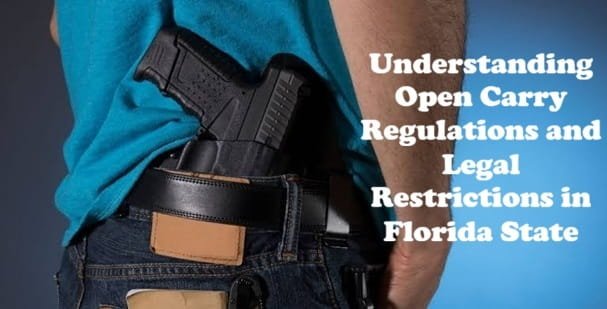
Is Open Carry Legal in Florida?
Florida generally prohibits openly carrying a firearm in public. Under Section 790.053, a person who openly carries a firearm commits a second-degree misdemeanor unless an exception applies. The restriction generally concerns carrying a firearm in a manner that is visible to ordinary observation, rather than merely possessing a firearm lawfully at home.
The law does not mean that every visible firearm in every circumstance is unlawful. Florida recognizes specific exceptions for activities such as certain hunting, fishing, camping, and target-shooting situations, subject to the conditions established by law. A firearm may also be carried openly in certain private settings or circumstances that fall outside the general prohibition.
Because exceptions are limited, firearm owners should not assume that having a firearm legally or being eligible to carry it concealed automatically permits open carry. The relevant statute and the facts of the situation determine whether the conduct is lawful.
How Florida’s Concealed-Carry Rules Differ
Florida’s concealed-carry framework differs from its open-carry restrictions. Since July 1, 2023, eligible individuals generally have been permitted to carry a concealed weapon or firearm without obtaining a Florida concealed weapon or firearm license, subject to statutory eligibility and location restrictions.
This is commonly referred to as permitless concealed carry. It does not remove the legal requirements concerning who may possess or carry a firearm, nor does it authorize carrying a firearm in every location. People who carry under this framework must still comply with applicable state and federal laws.
Florida also continues to offer concealed weapon or firearm licenses through the Florida Department of Agriculture and Consumer Services. A license may be useful for certain purposes, including when traveling to jurisdictions that recognize Florida licenses, but recognition depends on the other jurisdiction’s laws and any applicable agreement.
The central distinction is that permitless concealed carry does not make general open carry legal in Florida. A person should understand how the firearm is carried and whether the relevant legal conditions are satisfied.
Statutory Exceptions to Florida’s Open-Carry Prohibition
Florida law recognizes specific situations in which openly carrying a firearm may be permitted. These exceptions are not a general authorization to carry openly anywhere in public.
Certain individuals may carry firearms openly while engaged in, or traveling to and from, lawful activities such as fishing, hunting, or camping, when the statutory requirements are met. Target shooting and related lawful activities may also qualify under applicable provisions.
Other exceptions can apply to certain professional duties or activities authorized by law. The exact conditions matter, including whether the person is engaged in the qualifying activity and whether the firearm is carried in a manner permitted by the relevant statute.
For example, a person engaged in lawful fishing should not assume that the fishing exception authorizes openly carrying a firearm during unrelated activities elsewhere in public. Similarly, traveling to a shooting range does not automatically excuse conduct that falls outside the applicable exception.
When relying on an exception, firearm owners should consult the current wording of the statute or obtain legal guidance rather than relying on informal interpretations.
Where Firearms May Be Restricted
Even when a person may lawfully possess or carry a firearm, certain locations impose additional restrictions. Florida Statutes Section 790.06 identifies locations where licensed concealed carry is generally prohibited, including specified portions of establishments serving alcoholic beverages, police stations, courthouses, polling places, school facilities, and other designated locations, subject to statutory details and exceptions.
Other state laws and federal rules may independently restrict firearms in particular buildings, facilities, or circumstances. School property, airport security areas, federal facilities, and courthouses require especially careful attention because different legal provisions may apply.
Private property owners may also establish rules concerning firearms on their premises, subject to applicable law. A person who enters a location where firearms are prohibited may face consequences even if carrying the firearm would otherwise be lawful.
Before entering a public building, school-related property, or privately operated venue, individuals should verify the applicable restrictions rather than assuming that Florida’s general firearm rules apply uniformly everywhere.
Penalties for Unlawful Open Carry
A violation of Florida’s general open-carry prohibition is classified as a second-degree misdemeanor under Section 790.053. Under Florida’s general misdemeanor sentencing provisions, a second-degree misdemeanor may carry a penalty of up to 60 days in jail and a $500 fine, subject to the circumstances and applicable law. The offense classification makes it important to understand the rules before carrying a firearm openly in public.
Briefly displaying a firearm that is otherwise being lawfully carried concealed is treated differently. Florida law provides that a brief display to ordinary sight is not a violation of the open-carry statute unless the firearm is intentionally displayed in an angry or threatening manner, other than in necessary self-defense.
The distinction between brief exposure and intentionally carrying a firearm openly can be significant. If a firearm becomes visible while someone is adjusting clothing or moving, the legal analysis may differ from a situation in which a person deliberately carries it openly. The full circumstances determine how the law applies.
Practical Steps for Responsible Firearm Owners
Firearm owners should review current Florida statutes before carrying a weapon in public. They should confirm that they are legally eligible to possess the firearm, understand the difference between open and concealed carry, and check for location-specific restrictions.
When traveling, individuals should also research the laws of other states rather than assuming Florida rules apply elsewhere. A Florida concealed weapon license may be recognized in another state under a reciprocity agreement, but the other state’s restrictions and conditions still matter.
If an encounter with law enforcement results in a citation or arrest involving firearm possession or carry, individuals should remain calm, avoid escalating the interaction, and seek legal advice about their rights and obligations. A qualified Florida attorney can evaluate whether a statutory exception applies and explain potential defenses.
Conclusion
Florida maintains a general prohibition on openly carrying firearms in public, while allowing concealed carry by eligible individuals under the applicable legal framework. Specific exceptions exist for certain activities and circumstances, but they do not amount to unrestricted open-carry rights.
Firearm owners should understand the distinction between open and concealed carry, verify whether a statutory exception applies, and check location-specific restrictions before carrying a firearm. Consulting the current Florida Statutes or a qualified attorney can help prevent misunderstandings and potential legal consequences.
Frequently Asked Questions
Q. Is open carry legal in Florida?
Generally, no. Florida Statutes Section 790.053 prohibits openly carrying a firearm in public unless a specific legal exception applies.
Q. Does Florida’s permitless concealed-carry law allow open carry?
No. Florida’s permitless concealed-carry framework allows eligible individuals to carry concealed firearms without a license, subject to applicable restrictions. It does not create a general right to carry firearms openly.
Q. Can I openly carry a firearm while hunting or fishing?
Certain statutory exceptions may permit open carry while participating in lawful activities such as hunting, fishing, or camping. The specific conditions must be satisfied, and the exception should not be assumed to authorize open carry during unrelated activities.
Q. What is the penalty for unlawful open carry in Florida?
A violation of Section 790.053 is generally a second-degree misdemeanor. Potential penalties may include up to 60 days in jail and a $500 fine, depending on the circumstances and applicable sentencing law.
Q. Can a concealed firearm briefly become visible in Florida?
Yes. Florida law provides an exception for briefly displaying a lawfully concealed firearm to ordinary sight, provided it is not intentionally displayed in an angry or threatening manner outside necessary self-defense.
Q. Are firearms prohibited in certain Florida locations?
Yes. State and federal laws restrict firearms in specified locations, including certain government buildings, courthouses, school facilities, and other designated places. The applicable rule depends on the location and circumstances.