 By Ashley Robinson
 Driscoll’s, one of the largest berry companies in the United States, is facing a proposed class action lawsuit over its conventional strawberries. The case alleges that the company marketed its berries as safe, high-quality and environmentally responsible while failing to disclose the alleged presence or use of pesticide compounds connected to PFAS, commonly called “forever chemicals.”
The lawsuit, Washington v. Driscoll’s, Inc., was filed in federal court in California. The complaint was filed on July 8, 2026, under case number 3:26-cv-06961. The allegations have not been proven, and the court has not ruled that Driscoll’s violated the law.
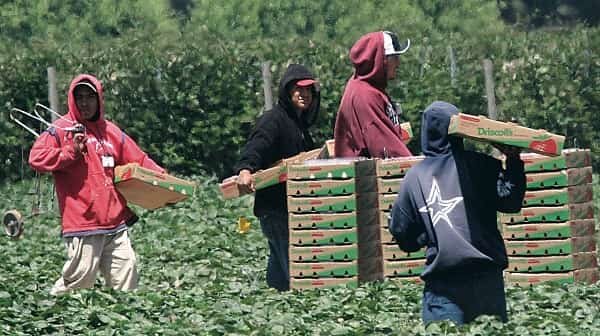
What the lawsuit claims
The complaint focuses on conventional Driscoll’s strawberries rather than the company’s separately marketed organic products. Plaintiffs claim that Driscoll’s used advertising and packaging to create the impression that its berries were produced under unusually strict food-safety and environmental standards.
The lawsuit points to Driscoll’s slogan, “Only the Finest Berries,” along with statements about food safety, quality controls, pesticide management, water monitoring, third-party audits and sustainability. Plaintiffs argue that these messages were misleading because consumers were not told that the berries allegedly could contain residues from fluorinated pesticides associated with PFAS chemistry.
Testing cited by the plaintiffs
The lawsuit relies in part on independent testing reported by the consumer advocacy organization Mamavation. According to the complaint, testing of conventional Driscoll’s strawberries detected residues from 12 pesticides. The filing says eight of those compounds were described as PFAS-related or “forever chemicals.”
The complaint lists compounds including flonicamid, fludioxonil, flupyradifurone, fluxapyroxad, indoxacarb, novaluron and tetraconazole. Plaintiffs argue that the alleged findings made the presence, risk or use of those substances important information for shoppers.
The testing cited in the case is an allegation contained in the complaint. It does not by itself establish that every Driscoll’s strawberry contains PFAS, that the berries caused illness or that the company violated food-safety regulations.
Why PFAS is central to the case
PFAS refers to a large group of synthetic chemicals that can persist in the environment for long periods. They are used in many industrial and consumer applications, and some PFAS compounds have been linked in scientific research to health and environmental concerns.
The lawsuit does not primarily claim that a particular consumer became sick after eating Driscoll’s strawberries. Instead, it argues that the company’s marketing was deceptive because shoppers allegedly paid for berries they believed were cleaner, safer or more environmentally responsible than ordinary produce.
Plaintiffs say they would not have purchased the strawberries, or would have paid less for them, if the alleged pesticide information had been disclosed on the packaging or in the company’s marketing.
The greenwashing allegations
The complaint also accuses Driscoll’s of “greenwashing.” In this context, that means presenting a product or business as more environmentally friendly than the lawsuit says it really is.
Plaintiffs claim that Driscoll’s promoted environmental stewardship, sustainable farming and reduced reliance on synthetic pesticides while allegedly allowing the use of pesticide compounds connected to PFAS. They argue that the company’s environmental messaging gave shoppers a misleading picture of how the strawberries were grown.
Driscoll’s has rejected the allegations. The company said it believes the lawsuit is without merit and pointed to its food-safety, compliance and quality programs. Driscoll’s also said it remains committed to responsible communication about its products and growing practices.
What consumers are seeking
The plaintiffs are asking the court to certify the case as a class action. The proposed class includes consumers in several states who purchased conventional Driscoll’s strawberries during the relevant period. The complaint also seeks monetary damages, restitution and other relief.
The lawsuit asks the court to require clearer disclosure of the alleged PFAS-related compounds. It also seeks an order preventing Driscoll’s from continuing to sell or market the berries in a way that plaintiffs say is misleading.
The court has not yet decided whether the case will proceed as a class action. Driscoll’s may answer the complaint or ask the court to dismiss some or all of the claims. No settlement, payment program or official claim form has been announced.
Consumers who want to follow the case should keep receipts, product photographs and purchase records. They should rely on official court notices for any future settlement or claim instructions. The case remains at an early stage, and the allegations have not been established as facts. This article is for general information rather than legal advice.