 By Ashley Robinson
 For motorcyclists navigating Florida’s congested highways and sun-baked city streets, the temptation to weave between lanes of stalled traffic is very real. But before any rider moves between lanes, there is one critical legal fact to understand: lane splitting is illegal in Florida.
Florida Statute § 316.209 is unambiguous on this point. It prohibits any person from operating a motorcycle between lanes of traffic or between adjacent lines or rows of vehicles. This applies whether traffic is moving or completely stopped — and it applies to all motorcycle types, including electric bikes.
Despite growing pressure from advocacy groups and several proposed bills during the 2026 Florida Legislative Session, the law has not changed. Florida remains one of the states where lane splitting, lane filtering, and lane sharing with larger vehicles are all treated as moving violations.
⚠ Key Fact: Lane splitting is illegal in Florida under Florida Statutes § 316.209. This has not changed in 2026, despite legislative proposals to the contrary.
This article explains exactly what the law says, how it differs from lane filtering and lane sharing, what penalties apply, how it affects accident liability, and what legal alternatives are available to Florida riders.
What Is Lane Splitting?
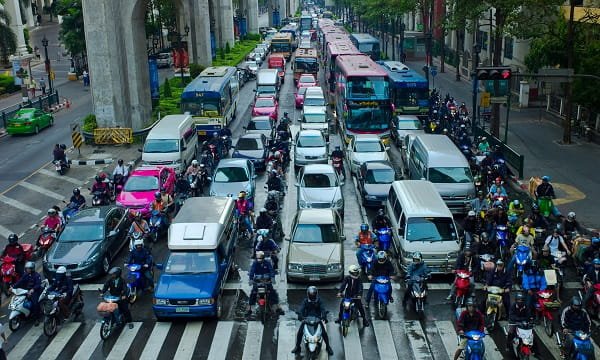
Lane splitting refers to the practice of a motorcycle riding between two lanes of traffic travelling in the same direction, typically to bypass congestion. It is sometimes confused with two related but distinct practices:
- Lane Filtering — moving through stopped or very slow traffic, such as edging to the front at a red light.
- Lane Sharing — two motorcycles riding side by side within a single lane.
While some states distinguish between these manoeuvres and permit lane filtering at low speeds, Florida law treats all three with the same prohibition when it involves passing between vehicles or riding between traffic lanes. The only exception under Florida law is that two motorcyclists may ride side by side in a lane if both riders agree — but a motorcycle may never share a lane with a car or larger vehicle.
ℹ California, Utah, and Montana have moved toward allowing low-speed lane filtering at stoplights. Florida has not adopted these changes as of 2026.
What Florida Law Actually Says
Florida Statutes § 316.209 — Key Provisions
The statute governing motorcycle lane use in Florida establishes two important rules that operate alongside each other:
- Motorcycles are entitled to the full use of a lane. No other vehicle may encroach upon that lane or deprive a rider of their full lane width.
- A motorcycle operator shall not overtake and pass in the same lane as the vehicle being overtaken.
- No person shall operate a motorcycle between lanes of traffic or between adjacent lines or rows of vehicles.
In plain terms: a rider has the right to their full lane, but cannot move outside it to pass or move between lanes of traffic under any circumstances — even when traffic is at a standstill.
Electric Motorcycles
Following 2026 legal updates, electric motorcycles are now expressly regulated under the same rules as traditional motorcycles. Riders of e-motorcycles have no special exemption and are subject to the same lane-splitting prohibition.
Penalties for Lane Splitting in Florida
Lane splitting is classified as a noncriminal traffic infraction and treated as a moving violation under Florida law. Consequences for a violation include:
- Fines ranging from approximately $150 to $500 depending on the circumstances and county.
- Three points added to the rider’s driving licence.
- Potential increases in motorcycle insurance premiums.
- Increased legal liability in the event of an accident.
⚠ Under Florida’s Modified Comparative Negligence law, if a rider is found more than 50% at fault for an accident — which lane splitting can contribute to — they cannot recover any damages at all.
How Lane Splitting Affects Accident Liability
The legal and financial consequences of lane splitting extend well beyond a traffic ticket. If a lane-splitting motorcyclist is involved in a collision, the fact that they were committing a traffic violation at the time becomes a central factor in determining fault.
Florida uses a Modified Comparative Negligence standard. Under Florida Statutes § 768.81, a party who is more than 50% responsible for an accident cannot recover compensation for their injuries. If a court or insurer determines that lane splitting was a primary cause of a crash, the rider could be left with zero recovery — even if the other driver was also behaving negligently.
Insurance companies are also aware of this distinction. A lane-splitting violation on record can result in higher premiums, policy complications, or claim denials following an accident.
Legal Alternatives for Florida Riders
Riders frustrated by Florida traffic congestion do have lawful options to make their commute faster and more bearable:
- Express Lanes — Florida motorcycles can use I-95 and I-75 Express Lanes for free, without a SunPass transponder. This is one of the fastest legal ways to bypass general-purpose lane congestion.
- HOV Lanes — High-Occupancy Vehicle lanes are open to single-occupant motorcycles in Florida, giving riders a legal fast-track through heavy traffic.
- Lane Positioning — Riders can position themselves to the left or right side of their lane at intersections to increase visibility and reduce the risk of rear-end collisions.
- Timing Your Ride — Adjusting departure times to avoid peak congestion periods remains one of the safest and simplest strategies.
ℹ Advocacy group ABATE of Florida continues to push for lane filtering legislation. Riders who support legalisation can engage with their state representatives to advance the issue.
 Olivia Wilson