 By Olivia Wilson
School bus safety is a major concern for Florida families, school districts, and motorists. Every school day, children board and leave buses near residential streets, busy intersections, and rural roads. Florida law establishes specific requirements for drivers approaching stopped school buses to reduce the risk of children being struck by passing vehicles.
Failing to stop when required can result in substantial fines, points on a driving record, and other legal consequences. However, the rules differ depending on the type of roadway, particularly whether the road has a physical median or a divided highway.
Florida’s school bus stopping requirements are primarily governed by Florida Statutes § 316.172. Understanding these rules helps drivers protect students and avoid preventable traffic violations.
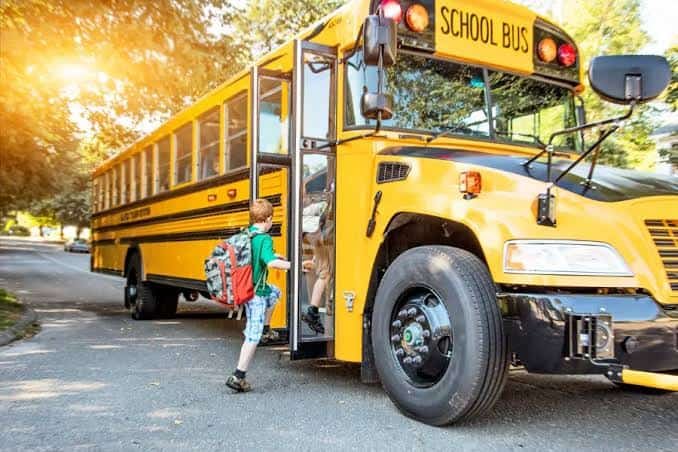
When Must Drivers Stop for a School Bus in Florida?
Under Florida Statutes § 316.172, drivers approaching a school bus displaying a stop signal must stop when the bus is stopped to load or unload children and its stop signal is displayed. Drivers must remain stopped until the bus withdraws the signal, resumes motion, or the driver is directed to proceed by the bus driver or a traffic officer.
The law applies to drivers approaching the bus from either direction unless a specific statutory exception applies. Motorists should not attempt to pass a stopped school bus simply because they believe the children have finished boarding or are not visible.
School buses use flashing warning lights and a stop arm to alert motorists that children may be entering or crossing the roadway. Drivers should anticipate that a child could appear suddenly from beside or in front of the bus.
School Bus Rules on Two-Lane Roads
On a typical two-lane road without a qualifying physical separation, traffic traveling in both directions must stop for a school bus displaying its stop signal while loading or unloading children.
For example, if a school bus stops on a two-lane residential road, a driver approaching from the opposite direction must stop as well as the driver traveling behind the bus. Both directions must remain stopped until the legal conditions for proceeding are met.
These rules help protect children who may need to cross the road after leaving the bus. Even when a driver is traveling away from the school, the driver must stop if the law requires it.
Drivers should leave enough distance to stop safely and avoid changing lanes to get around a stopped school bus.
The Exception for Divided Highways
Florida law provides an important exception for traffic traveling in the opposite direction of a stopped school bus.
Under Florida Statutes § 316.172(2), drivers traveling in the opposite direction are not required to stop when the roadway has one of the following forms of separation:
- An unpaved space at least five feet wide.
- A raised median.
- A physical barrier separating opposing traffic.
For example, if a school bus stops on one side of a divided highway with a raised concrete median, drivers traveling on the opposite side generally may continue without stopping. However, vehicles traveling in the same direction as the bus must still stop when required.
A painted line alone does not qualify as a raised median or physical barrier. Drivers should examine the actual roadway design rather than assume that multiple lanes automatically create an exception.
Penalties for Passing a Stopped School Bus
Florida imposes substantial civil penalties for violating school bus stopping requirements under Florida Statutes § 318.18.
| Violation | Minimum civil penalty |
| Failing to stop for a school bus | $200 |
| Passing on the side where children enter or exit | $400 |
| Violation causing serious bodily injury or death | $1,500 |
Additional consequences may apply. A second or subsequent failure-to-stop offense within five years can result in a driver’s license suspension of 180 days to one year. For repeat violations involving passing on the side where children enter or exit, the suspension can range from 360 days to two years. A violation causing serious bodily injury or death can lead to a suspension of at least one year.
Florida also permits school districts to use school bus infraction detection systems under § 316.173. As a result, certain violations may be documented by an authorized camera system. Drivers should read any notice carefully and follow the stated process and deadlines.
Practical Safety Tips for Drivers
Following school bus laws requires attention and patience. Drivers can reduce the risk of violations by adopting a few simple habits:
- Watch for flashing yellow lights, which warn that a school bus is preparing to stop.
- Begin slowing down early and maintain enough distance to stop safely.
- Stop when the red lights and stop signal are activated, unless a statutory exception applies.
- Never pass a stopped bus on the side where children enter or exit.
- Avoid distractions and watch for children near the roadway.
- Wait until the stop signal is withdrawn before proceeding.
These precautions are particularly important in residential neighborhoods, near schools, and on roads where children may need to cross.
Conclusion
Florida’s school bus stopping laws are designed to protect children as they board and leave school buses. Under Florida Statutes § 316.172, drivers generally must stop when a bus displays its stop signal, regardless of their direction of travel, unless the divided-highway exception applies.
Penalties can include substantial fines and driver’s license suspension, particularly for repeat violations or incidents resulting in serious injury or death. Drivers should recognize warning signals early, stop at the required distance, and remain stopped until it is lawful to proceed.
Following these rules is not only a legal responsibility but also an essential step toward keeping Florida’s children safe on their journeys to and from school.
Frequently Asked Questions
Q1. Do you have to stop for a school bus coming from the opposite direction in Florida?
A: Generally, yes. Drivers traveling in either direction must stop unless they are traveling in the opposite direction on a divided highway with an unpaved space of at least five feet, a raised median, or a physical barrier.
Q2. What is the fine for passing a school bus in Florida?
A: The minimum civil penalty for failing to stop is $200. Passing on the side where children enter and exit carries a minimum civil penalty of $400. Additional penalties may apply in cases involving serious bodily injury or death.
Q3. Can you pass a school bus when its red lights are flashing?
A: No. Drivers must stop when a school bus displays its stop signal while loading or unloading children and remain stopped until the signal is withdrawn, subject to the divided-highway exception.
Q4. Can a school bus camera issue a traffic violation in Florida?
A: Yes. Florida permits school districts to use authorized school bus infraction detection systems to enforce applicable stopping requirements. Drivers who receive a notice should review the evidence and follow the instructions and deadlines provided.
Q5. Can repeated school bus violations result in license suspension?
A: Yes. Repeat violations within five years can result in license suspension. The suspension period depends on the type of violation and may be longer when a driver passes on the side where children enter and exit.